
Spotlight: Scientia Karachi ACM-W Professional Chapter
Where Science Journalism Meets Community Empowerment
By Asegul “Ace” Hulus
Welcome back to the global ACM-W Chapter Tour! Today’s visit is to the Scientia Karachi ACM-W Professional Chapter in Pakistan, a chapter that stands out from many others in the ACM-W network. Instead of being based at a university, it is rooted in a dynamic media environment focused on science. This includes the Scientia Pakistan magazine, a well-regarded national publication that champions science journalism, communication, and public involvement. The organization’s outreach is fueled by the energy of scientists, journalists, and communicators who share a common goal: to achieve pioneering excellence in science.
A Chapter Rooted in Media and Advocacy
The chapter is supported by the Scientia Pakistan magazine (scientiamag.org), a science media organization that serves as both its platform and community hub in Pakistan. With a membership largely composed of active science writers, researchers, journalists, and communicators already in the professional sphere, the chapter cultivates a distinct practitioner-centered ethos, bridging the gap between rigorous science and effective public communication.
The Scientia Karachi ACM-W professional chapter serves as a hub, connecting a significant portion of Pakistan’s scientific minds and fostering strong ties with international organizations like the World Federation of Science Journalists and the World Science Journalism Forum. This dual engagement establishes it as a unique conduit between Pakistan’s scientific circles and the wider global scientific community.
Voices of Leadership
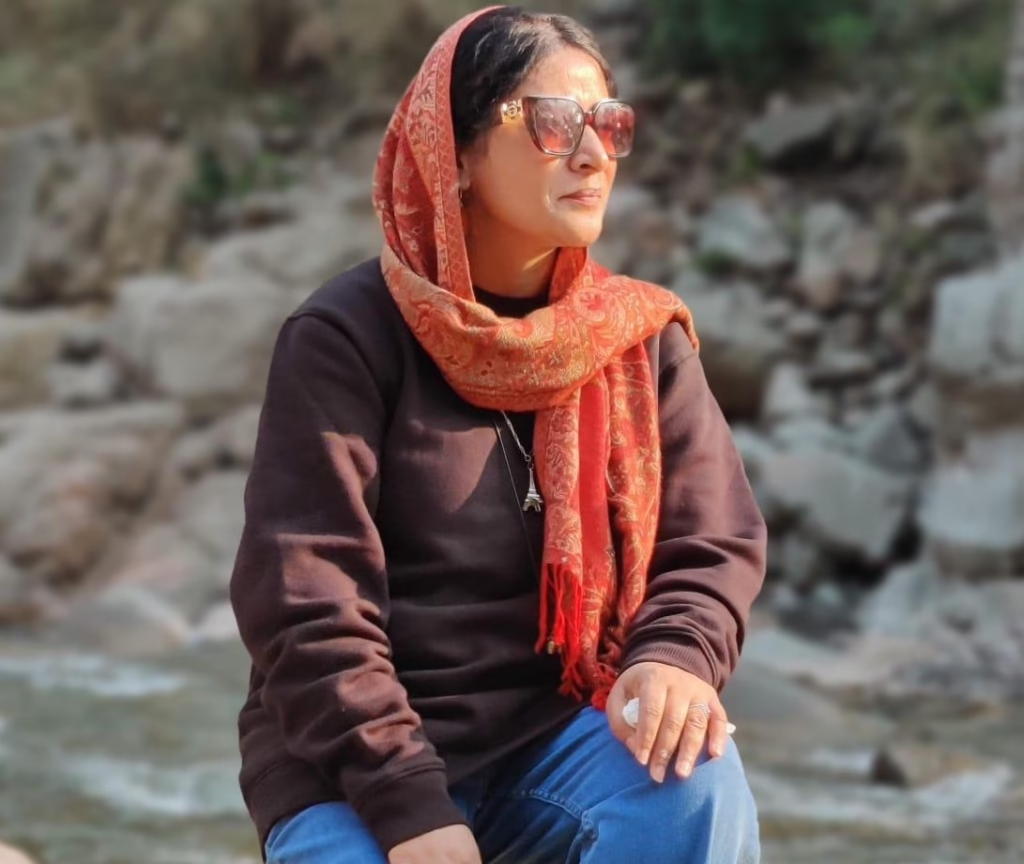
Saadeqa Khan, Chair of the Scientia Karachi ACM-W Professional Chapter, is also its founder, CEO, and Editor-in-Chief at the Scientia Pakistan magazine. She is a member of the Oxford Climate Journalism Network (Second Cohort) and the National Association of Social Workers (NASW). She is also a fellow with the National Press Foundation in Washington, the Falling Walls Foundation, and the Science Journalism Forum. She has been honored with many international journalism grants and awards. The principle that guides her is that:
“Leadership isn’t a title — it’s a decision you make every day to grow beyond yesterday’s limits. Learn relentlessly, lead intentionally, and push boundaries that turn vision into meaningful impact. The future belongs to founders who refuse to stay comfortable.”
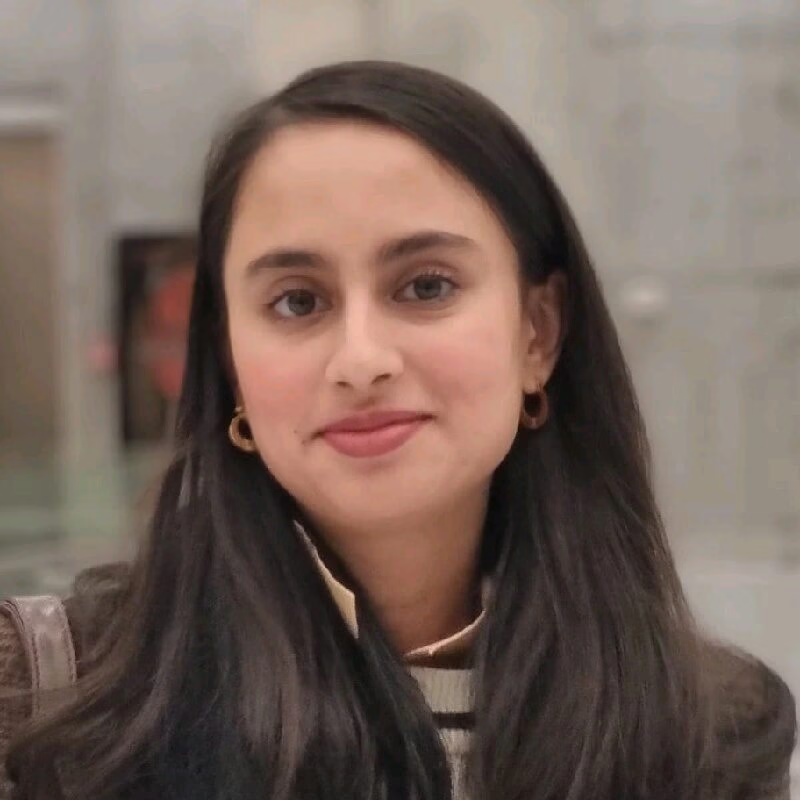
Maham Maqsood, serving as Vice-Chair, is also a co-founder and Managing Editor of the Scientia Pakistan magazine. With a Master’s degree in Biochemistry from Middle East Technical University in Ankara and more than five years of experience in science communication and outreach, she brings significant academic knowledge and hands-on experience to the chapter’s initiatives. She notes to:
“Stay confident in your vision, but let curiosity shape your path. The strongest leaders are bold enough to keep asking, learning, and exploring what’s next. Encourage others to bring forth ideas and create a space for everyone to express freely.”
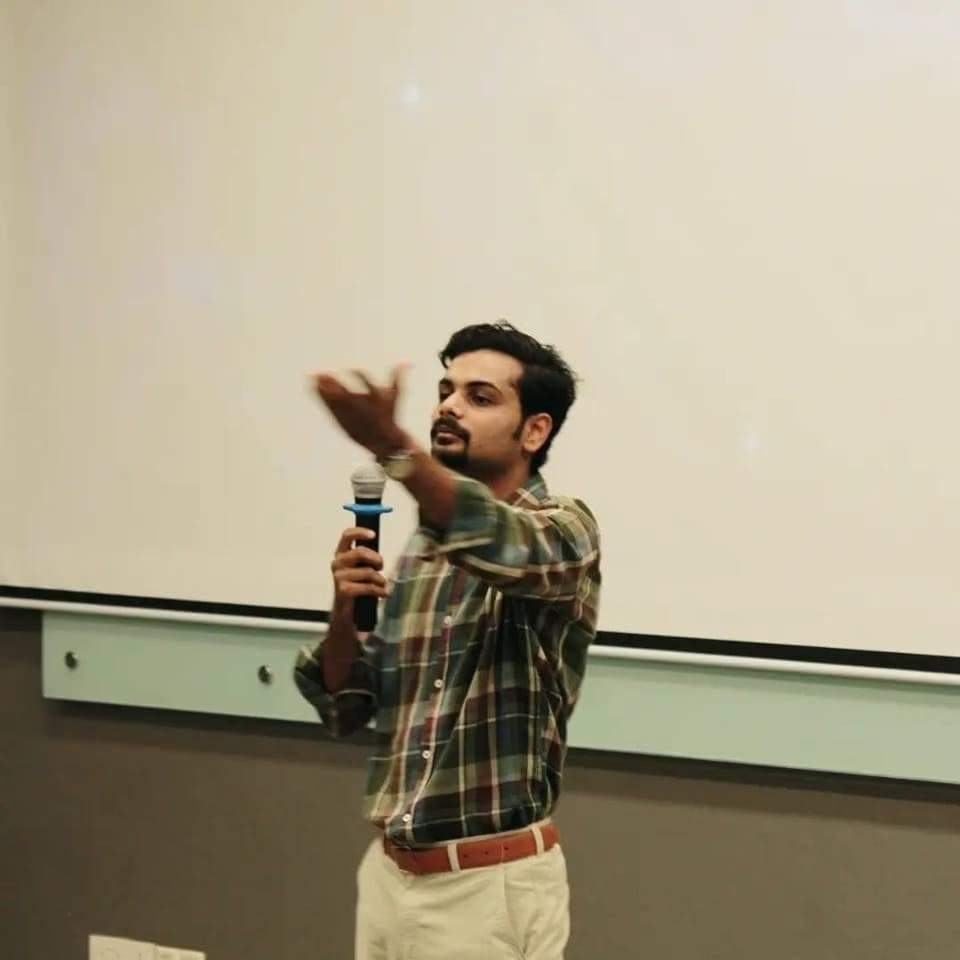
Treasurer Fouz Siddiqui is also a co-founder of the Scientia Pakistan magazine, and Kainaat Studios’ Manager of Science Outreach. He possesses a deeply international perspective, cultivated through eight years in science communication, prior experience as a higher education lecturer, an M.Sc. in Astronomy, and a second Master’s degree currently in progress in Baku, Azerbaijan. He notes that:
“As we continue exploring advanced AI technologies, we must collaborate with stakeholders from all regions — especially ensuring meaningful participation from the Global South — alongside full interdisciplinary inclusion of the social sciences to ensure progressive outcomes that are both humanly sustainable and friendly to society.”
The broader membership includes Gulle Lalah Saleem, Rebah Tanvir, Shumyl Qazi, Muneeb Siddiqui, Adnan Mirza, Arsalan Sadiq, Sadaf Sarfraz, Lubna Rashid, Muniba Usman, Owais Khan, Fawwad Raz, and Hifz Ur Rahman.
From Workshop to Movement: Programs With Impact
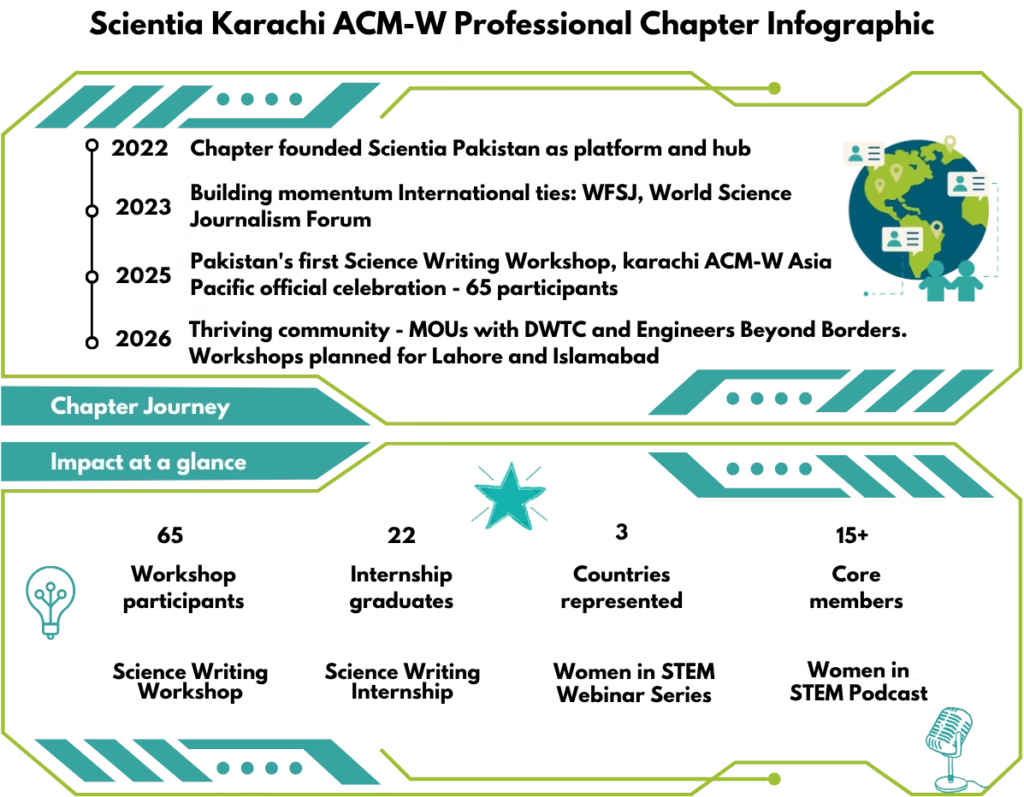
To date, the chapter’s most important achievement was Pakistan’s inaugural Science Writing Workshop, which took place from September 12-13, 2025, at Habib University, a leading institution in Pakistan for liberal arts and integrated sciences. This event was a global initiative celebrating women in computing, specifically recognized by the ACM-W Asia Pacific Region as the “Scientia Karachi ACM Celebration of Women in Computing.”

The workshop, partly financed by an ACM-W grant, attracted 65 attendees and garnered national media attention. It featured international experts in its training sessions, keynote addresses, and panel discussions. ACM-W Chair Rukiye Altın, who participated as a speaker, reflected:
“Your enthusiasm, hard work, and dedication to making science more accessible have set a strong foundation for future science writers and communicators in our community.”
Furthermore, the chapter launched a Science Writing Internship Program, providing a comprehensive 2.5-month training opportunity for both undergraduate and graduate students. The inaugural training session included 22 trainees, comprising 19 from Pakistan and 3 international participants from Scotland, China and Bahrain. They gained practical skills in science journalism, editorial procedures, and public communication.
The chapter intends to enhance its campus outreach by 2026, scheduling science writing workshops in Lahore and Islamabad. The initiative will prioritize engaging young women in cities where professional science communication networks are not widely available.
Mentorship That Opens Doors
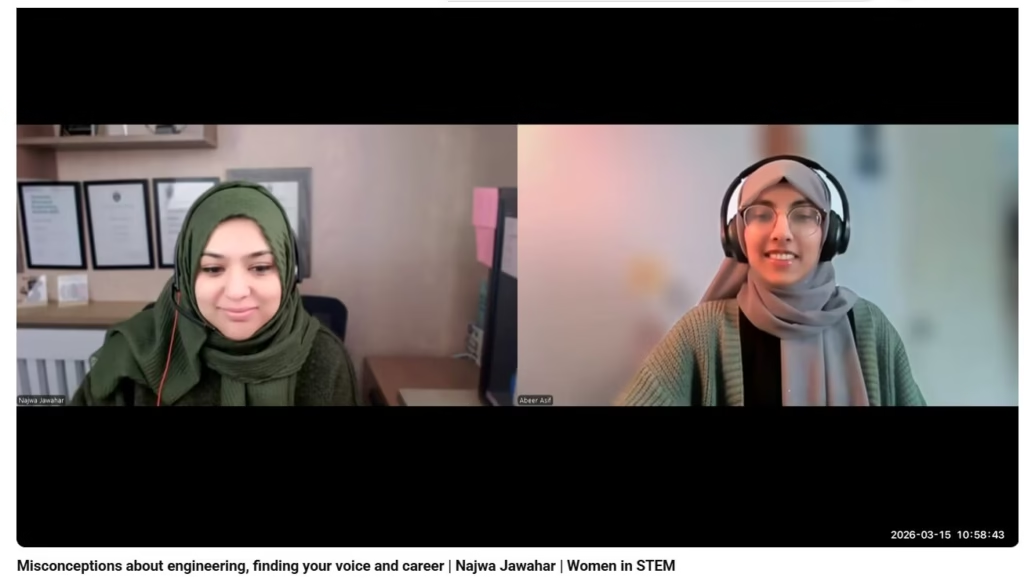
The story of Abeer Asif, a Fulbright Scholar and a two-month intern at the Scientia Pakistan magazine in 2025, perhaps best illustrates the impact of the chapter’s mentorship. Soon after, she started her doctoral studies at Worcester Polytechnic Institute in the US. Since then, she has started a Women in STEM podcast series that highlights women in science with international careers at the magazine and has begun writing for Pakistani national newspapers, both of which were directly influenced by her experience with the chapter.
The chapter draws inspiration from figures like Dr. Bushra Anjum, a notable personality in computing and community leadership, alongside Dr. Syed Faisal Ur Rehman, Dr. Geoffrey Hinton, and Jensen Huang. These individuals exemplify the principle that outstanding scientific achievement should be coupled with a sense of global accountability.
Values in Action: Inclusion, Global South, and Sustainability
Based in the Global South, the Scientia Karachi ACM-W Professional Chapter prioritizes amplifying perspectives and voices that are typically excluded from international scientific discussions. The platform provided by the Scientia Pakistan magazine features contributors from diverse backgrounds and fields, demonstrating a true dedication to inclusivity.
Sustainability is inherent in the design: prioritizing digital operations minimizes reliance on physical resources, while the chapter is supported through Scientia Pakistan magazine’s existing media platform and operations. This integrated model enables sustainable outreach and long-term activities in a resource-efficient manner. Everything, from role assignments to event management, is built on transparency and shared responsibility.
The Scientia Pakistan magazine has entered into a Memorandum of Understanding (MOU) with the Dubai World Trade Centre, designating them as the media partner for SATexpo2026, scheduled for June 2026. The goal of this collaboration is to build relationships within the global satellite and space industries. A forthcoming MoU with Engineers Beyond Borders, a UK-based organization established by Pakistani engineers, further highlights the chapter’s goal of closing science communication gaps in emerging global markets.
Looking Ahead
In 2026, the chapter intends to introduce a webinar series dedicated to women in STEM. This initiative will complement workshops in Lahore and Islamabad and will be based on a programming format that has already been successfully piloted. The Scientia Karachi ACM-W Professional Chapter aims to bridge geographical divides by expanding networking programs that connect young women from remote and underserved regions with global scientific and research networks.
The inclusion of Chair Saadeqa Khan in the UN’s Decade of Action program, alongside her recognition as a “My Glam Superpowers” honoree, perfectly symbolizes the chapter’s expanding international influence.
Final Thoughts
The Scientia Karachi ACM-W Professional Chapter demonstrates what a chapter focused on media, journalism, and science communication can accomplish. It’s a place where expertise combines with advocacy, mentorship leads to tangible career advancement, and the values of the Global South are actively put into practice rather than just being spoken about. As its influence expands from Karachi to Lahore, Islamabad, Dubai, and further afield, it serves as a powerful example of the many ways scientific leadership can manifest and the significant impact a cohesive, principle-centered network can achieve. The infographic below illustrates this influence.
Connect with Scientia Pakistan ACM-W Professional Chapter:
- Email: info@scientiamag.org
- Website: scientiamag.org
- Instagram: instagram.com/scientiamagazine
- LinkedIn: linkedin.com/company/magazinescientia
- Twitter/X: x.com/MagScientia
- YouTube: youtube.com/@MagazineScientia
- Facebook: facebook.com/MagazineScientia
Connect with ACM-W chapters and the Spotlight series editor, Asegul “Ace” Hulus:
Email: acmw-chapters@acm.org
Looking forward to seeing you all on the next tour! Your friendly guide is signing off.