ACM-W Above and Beyond: Dr. Lisa Kopf’s Journey
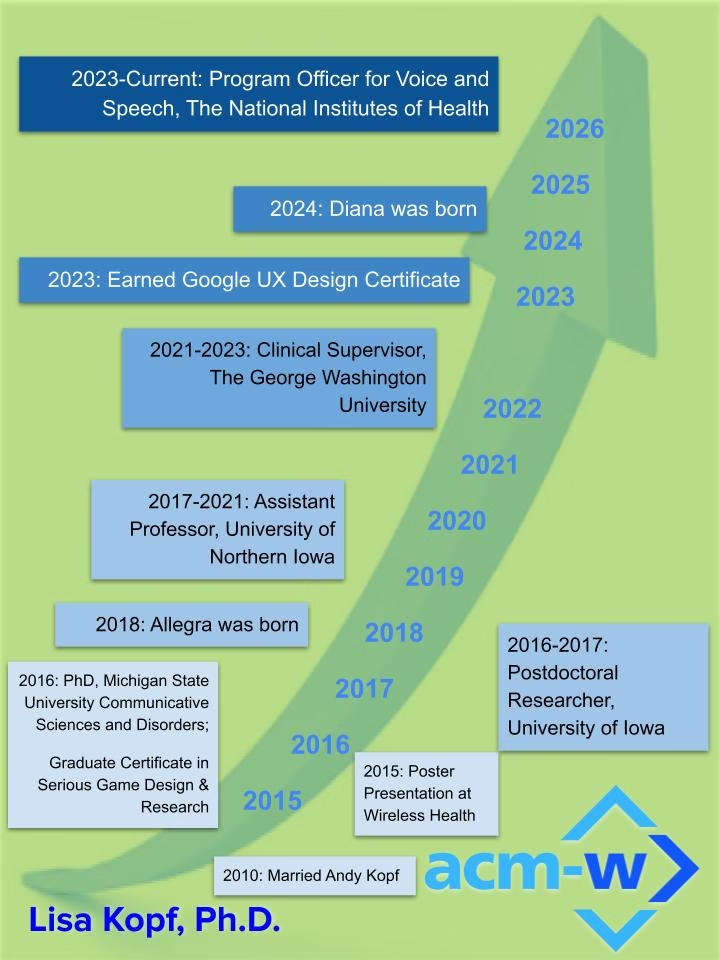
Lisa Kopf is a program officer at the National Institute on Deafness and Other Communication Disorders at the National Institutes of Health, where she supports research related to voice, speech, and communication disorders. She earned her bachelor’s, master’s, and PhD degrees in speech pathology, with doctoral work focused on voice and voice disorders. During her PhD, her interests expanded to include human-computer interaction and game design, shaping an interdisciplinary path that has encompassed clinical work, research, teaching, and academic leadership. Across that journey, Lisa has built a career at the cutting edge of communication sciences and technology research.
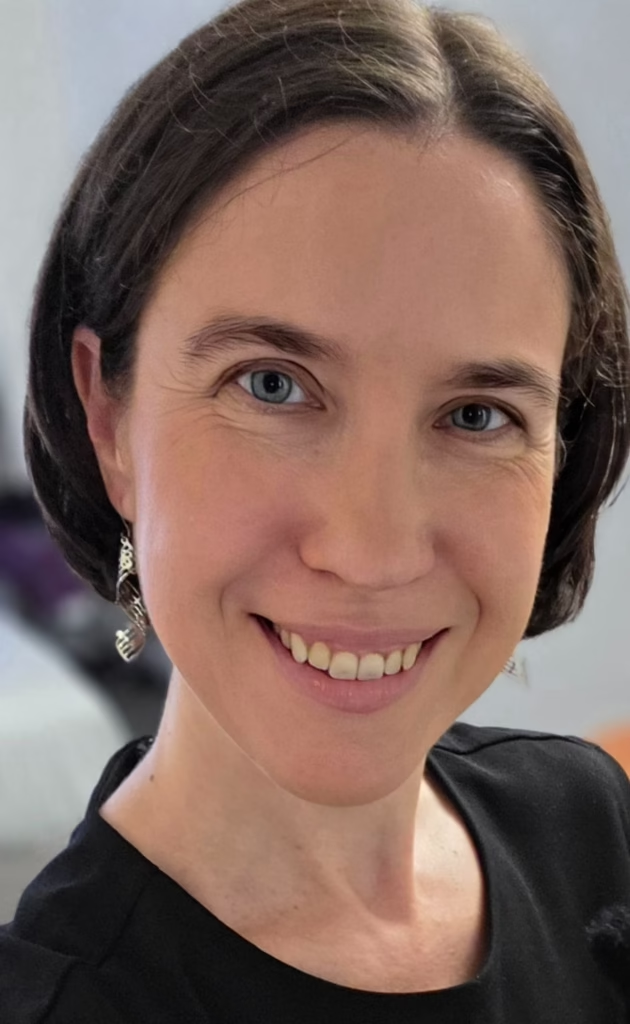
Current role, organization: Program Officer for Voice and Speech at the National Institute on Deafness and Other Communication Disorders in the National Institutes of Health
Year of Scholarship and Conference Attendance: Wireless Health 2015
Country of Origin: United States
Country of residence at the time of receiving ACM-W Scholarship: United States
What has been a highlight of attending the conference (utilizing the ACM-W Scholarship)?
When I first reflected on my experience in 2015, I shared that my experience was great and that I “received a lot of positive feedback on my research path.” (https://women.acm.org/scholars/acm-w-scholars/lisa-kopf/) Now reflecting 10 years later, one major highlight is that the Wireless Health conference was my first time visiting the NIH campus. At the time, I did not imagine NIH would one day become my workplace, so looking back, the experience feels especially meaningful and full circle.
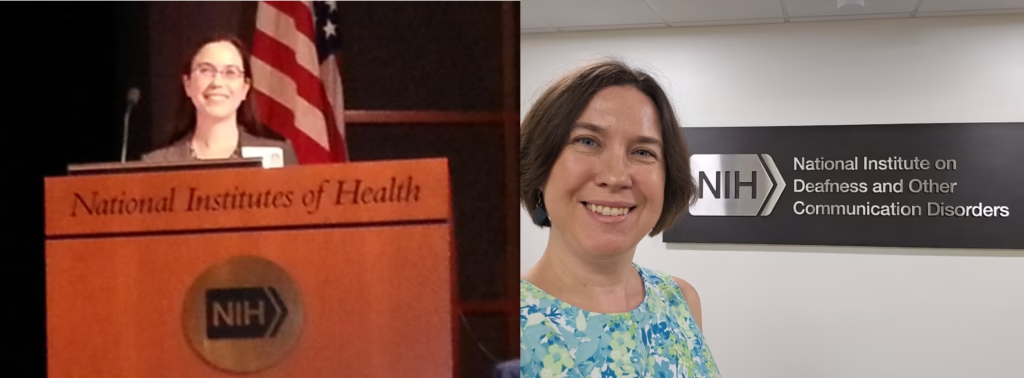
Left: 2015, Wireless Health Conference. Right: 2023, 1st day as an NIH employee.
How did attending the ACM-W-sponsored conference impact your career? Did it lead to any important connections in your field?
The biggest impact was broader than any single connection: attending conferences like Wireless Health and CHI helped me see what it meant to work across disciplines. My poster focused on Parkinson’s disease and explored how video-based education about speech and voice treatment could affect people’s confidence and interest in pursuing change. Coming from speech pathology, I felt like one of the very few people with my background in those spaces at the time. That was both intimidating and exciting. It exposed me to the language, methods, and mindset of computer science and HCI, and it reinforced my interest in interdisciplinary work. Over time, I have found it rewarding to see those worlds grow closer together, with more researchers participating in these interdisciplinary conversations.
What has been your career highlight? What are you most proud of?
I am most proud of where my path has led. After earning bachelor’s, master’s, and PhD degrees in speech pathology, exploring HCI and game design during my PhD, completing a postdoc, serving as an assistant professor, and later working in clinical supervision, I have now found the place where I hope to stay. I’ve liked all my jobs, but they just never felt like something I was going to be at forever. I finally feel like I’ve made it, and now I get this really cool front-row seat to see and support growth in all these different disciplines. I see this role as a place where I can apply my experience from all of my roles to support researchers and help shape the future of work in voice, speech, and communication disorders.
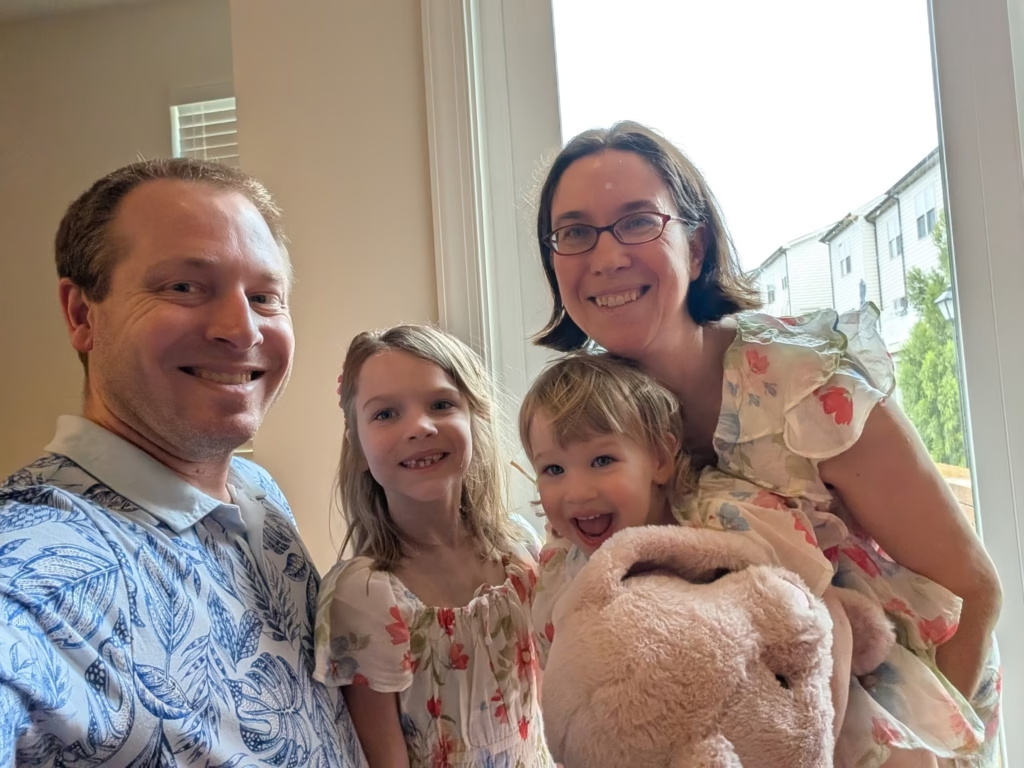
The Kopf Family.
What aspects of your career have you found challenging?
The biggest challenge was finding the right fit. After finishing my PhD, I tried many different professional roles and learned from each, but for a long time none felt like the place I would stay. One of the hardest parts of building a career is recognizing that there are many kinds of jobs beyond the most obvious paths. I recall hearing a conference speaker share that “It’s possible that your ideal job may not have even been invented yet.” That uncertainty can be difficult, but it taught me to stay open to opportunity and keep learning.
Was the connection to ACM-W helpful or important in any immediate and lasting way?
ACM-W was helpful in giving me access to spaces that were quite different from my home discipline. Even though I “was kind of an N of 1 in a sea of computer scientists,” I felt well supported in both worlds due to strong role models.
One theme that runs through my story is openness: openness to new fields, new methods, and new career paths. I began her PhD knowing I wanted to study the human voice, but not yet knowing exactly how. By following opportunities in research, HCI, game design, teaching, and clinical work, I built a career that now allows me to support a wide range of investigators with empathy and perspective. My advice to others is to keep an open mind and take opportunities seriously, because even if you think it’s not “what you want it to be, it’s a learning opportunity, and you will learn something that you will carry with you forward.”