ACM-W Above and Beyond: Dr. Charu Kalra’s Journey
By Jessica Yauney
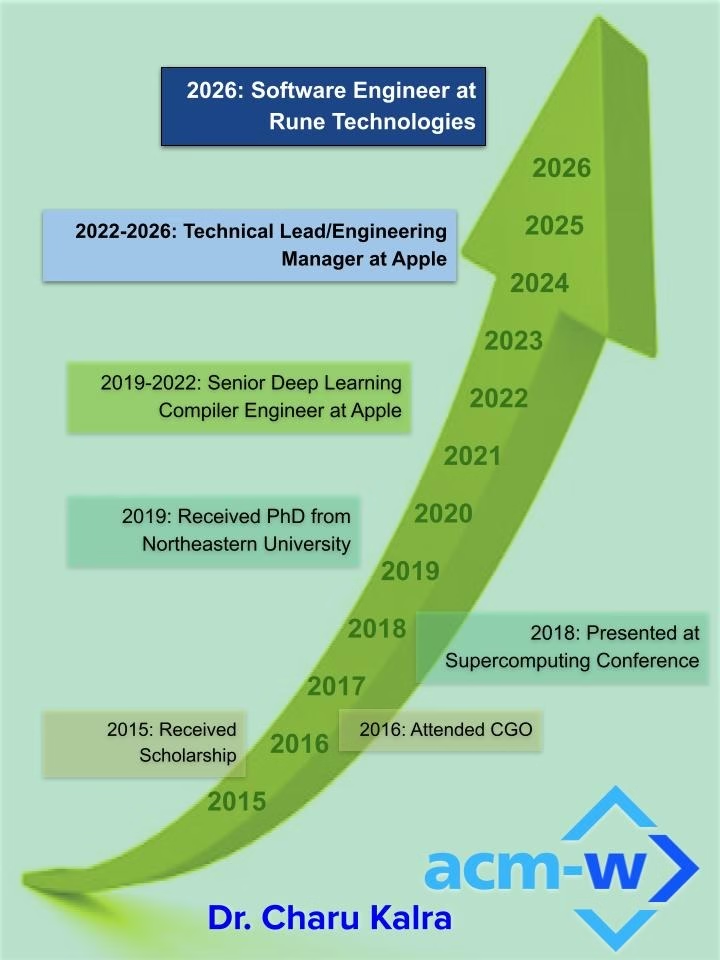
This month’s feature highlights Dr. Charu Kalra, who received an ACM-W scholar to attend International Symposium on Code Generation and Optimization in 2016. Charu Kalra is a compiler and optimization researcher who recently joined Rune Technologies. In her current role, Charu focuses on optimizing TyrOS, a next-generation, AI-powered government logistics platform. Prior to this, she worked at Apple, where she specialized in optimizing machine learning workloads through compiler techniques for the Apple Neural Engine (ANE). The ANE is a high-performance, energy-efficient processor designed specifically to accelerate machine learning inference on Apple Silicon.
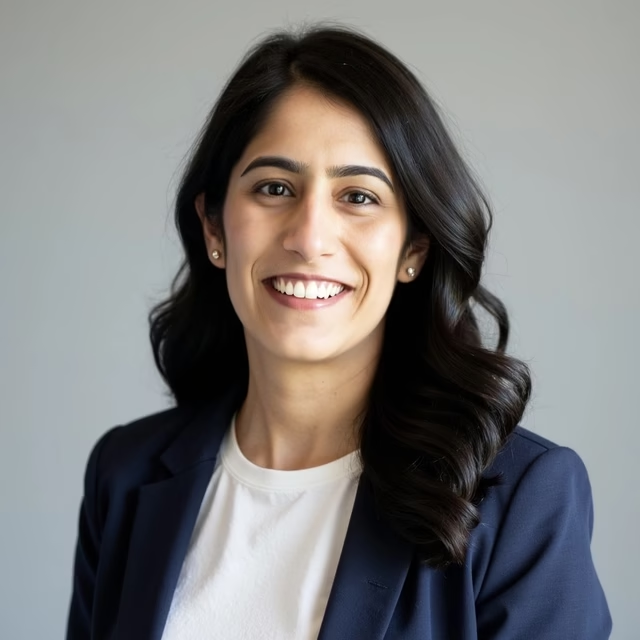
Current role, organization: Software Engineer at Rune Technologies
Year of Scholarship and Conference Attendance: International Symposium on Code Generation and Optimization 2016
Country of Origin: India
Country of residence at the time of receiving ACM-W Scholarship: United States
What has been a highlight of attending the conference (utilizing the ACM-W Scholarship)?
Attending the International Symposium on Code Generation and Optimization (CGO) in Spain was an incredibly memorable experience. Co-located with the IEEE Symposium on High Performance Computer Architecture (HPCA) and the ACM SIGPLAN Symposium on Principles and Practice of Parallel Programming (PPoPP), CGO coincided with two of the largest conferences in the computer architecture space. It was my first-ever conference, so it holds a special significance. Some highlights included attending top-notch paper presentations and tutorials, and engaging in stimulating discussions with fellow graduate students and faculty members. The memories of that conference are still vivid in my mind, and I am deeply grateful to ACM-W for granting me this opportunity at such an early stage in my research journey.
How did attending the ACM-W-sponsored conference impact your career? Did it lead to any important connections in your field?
The ACM-W-funded conference came at a formative moment in my career, providing me with early exposure to the research community. CGO helped me understand the broader landscape of my field. Large conferences can be overwhelming, so one of the most valuable aspects of attending CGO was being paired with a mentor. Interacting with my mentor, Dr. Vijay Janapa Reddi, was particularly beneficial. He helped me navigate the conference, introduced me to several other professors, and offered me valuable career guidance. I still maintain a connection with him, and the mentorship he provided me was incredibly useful.
What has been your career highlight? What are you most proud of?
It’s difficult to choose a single highlight because my career has evolved over time, and each achievement has been significant in its own right. One of my early-career accomplishments was having my paper accepted for publication at the ACM/IEEE Supercomputing Conference. SC is one of the most prestigious and renowned conferences in the field of high-performance computing. My paper’s acceptance marked a significant milestone in my doctoral journey and contributed to my career advancement and transition from academia to the tech industry. Plus, I’m proud of the high-impact work I did at Apple. Whether the device is in your pocket, on your desk, or something you’re wearing, there’s a high chance a piece of my work is with you. I’m also thrilled about the work I’m doing at Rune, and I can’t wait to show what we’ve been building to everyone.
What aspects of your career have you found challenging?
One of the challenges I faced during my PhD was the pursuit of the unknown. Identifying the problem for your PhD research and devising a novel solution can be incredibly frustrating. You often find yourself without a clear direction.
In the industry, a product team “typically” has a clear objective, and many individuals thrive in such an environment. However, there are instances when that objective remains ambiguous, or even when it’s known, the roadmap may not be well-defined. This is precisely where PhD training becomes valuable. It prepares individuals to navigate this ambiguity and create structure where none exists.
Over time, I’ve come to really enjoy tackling problems that don’t have a clear answer. I feel fortunate to have had the opportunity to lead several complex and high-impact projects from their earliest stages of ambiguity to successful product release. What’s challenging is often incredibly rewarding when you witness the positive impact it has on users’ lives. This principle has consistently held true throughout my tenure at Apple and Rune.
Do you have any advice for other ACM-W members?
My biggest advice is to be your own advocate. If you wait for opportunities to come to you, they may never arrive. You have to actively seek roles and projects that allow you to grow and increase your visibility. However, advocating for yourself doesn’t mean doing it all alone. Don’t be afraid to ask for help. It’s better to ask for help than to fail. This might seem obvious, but it’s surprising how many people don’t get it in practice. When you ask for help and seek expertise, you learn from others and grow from their experience. In my own career, I have received incredible support and respect from my coworkers. They have been some of my strongest allies, and I’m deeply grateful for them. Ultimately, you have the power to shape your own destiny.