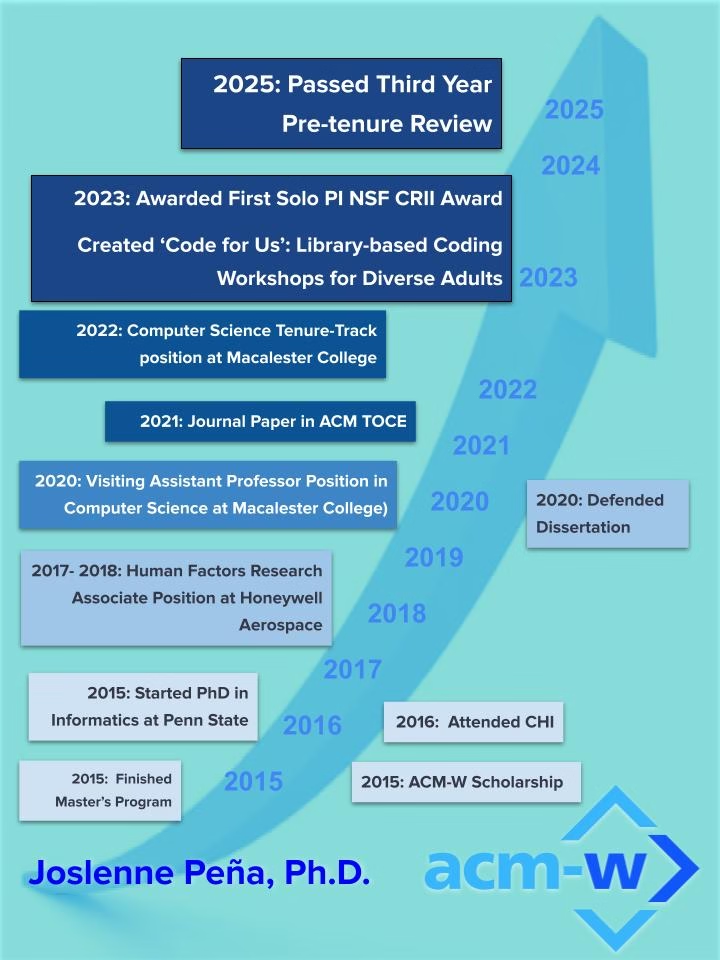
ACM-W Above and Beyond: Dr. Joslenne Peña’s Journey
By Jessica Yauney
This month, we are catching up with Dr Joslenne Peña, who attended the CHI 2016 on an ACM-W scholarship. Dr Peña is now an Assistant Professor of Computer Science at Macalester College, working at the intersection of computing education and human-computer interaction. In her research, she explores the use of informal learning spaces, such as libraries, as welcoming environments for learning. She designs and evaluates informal coding workshops for middle-aged and older adults in the Saint Paul community. In her current work, she is designing and developing an adult informal learning workshop series called Code for Us. Beyond her research, she is a dedicated mentor and advocate for marginalized students in STEM. She has contributed to teaching and mentoring programs such as iD Tech Camps, iTech Academy, and Code for Her. As a member of the Penn State Graduate School Alumni Society Board of Directors, she helps connect graduate students with alumni for career development, industry insights, and networking opportunities.
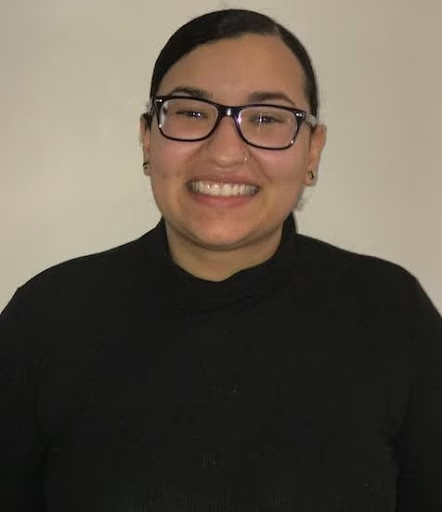
Current Role and Organization: Assistant Professor of Computer Science at Macalester College
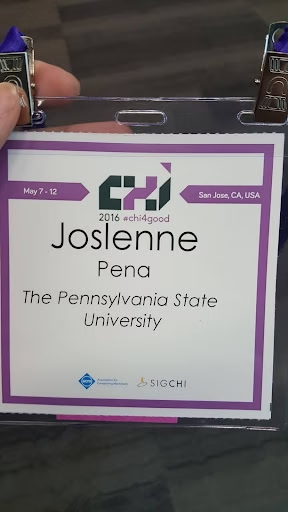
Year of Scholarship and Conference Attendance: CHI 2016
Country of Origin: United States
Country of Residence at the Time of Receiving ACM-W Scholarship: United States
What has been a highlight of attending the conference?
I complemented the ACM-W funding by serving as a Student Volunteer at the CHI conference. The scholarship helped alleviate the worries of funding and allowed me to network with peers at my stage, attend research talks, and connect with speakers. I was able to support friends with their paper talks and visualize myself doing the same. It motivated me to return to the conference. CHI is such a large event with so many people and sessions that attending only once didn’t feel sufficient!
How did attending the ACM-W-sponsored conference impact your career? Did it lead to any important connections in your field?
Attending such a huge premier conference like CHI was overwhelming! At the same time, it gave me a greater sense of empowerment, motivating me to continue my graduate studies. The really cool part of being an academic is sharing your work with others, discussing new research ideas, and checking out student work. Coming back energized and renewed is part of the conference experience; it gives you the motivation to keep going! The other side of that is commitment to service in that community. Over time, I have shifted my focus to the SIGCSE community where my work lives. Being able to serve on various organizing committees and future leadership positions in the Technical Symposium has been important to me! Though this stems from my initial relationship with CHI and my excitement to attend an ACM conference.
What has been your career highlight? What are you most proud of?
I am most proud of the research I’ve been able to pursue because of my students. At a liberal arts institution, mentoring undergraduate researchers can be both challenging and deeply rewarding. I never had the chance to participate in undergraduate research myself. Being able to provide these opportunities, especially to marginalized students, including students of color and queer-identifying students, has been incredibly meaningful. My research is community-engaged, which means students work directly on projects that have a real impact on people and the tools they use. For example, students have worked on coding workshops designed for low-income or diverse adult learners of color.
What aspects of your career have you found challenging?

Being a professor, especially pre-tenure, one thing I’ve found challenging is creating a feasible balance between personal and professional life. The irony is that being in academia affords you a level of flexibility that you may not receive in industry, yet you find yourself extremely busy working odd hours! While I wholeheartedly value the flexibility of my job, at times, I struggle with managing many of the tasks I should be doing besides teaching. I think it’s important to create a schedule that allows you to take breaks, maintain your mental health, and pursue things that you are passionate about. This way, you can continue to bring the energy to different aspects of your work, particularly those that impact students.
Was the connection to ACM-W helpful or important in any immediate and lasting way?
Immediately, it was empowering to have this funding at such a pivotal time in my graduate career. Funding can truly be a barrier in an academic career, and so I am grateful for the assistance in entering these spaces. In a lasting way, it’s been helpful to share the scholarships as a resource for my undergraduate students looking to attend research conferences. Attending conferences can be difficult for undergraduates, so this opportunity is really great.
Is there anything else you would like to share with us?
I want to take the opportunity to emphasize the importance of representation and naming marginalization in Computing fields. Even though gradual, positive developments have occurred over the past decade, it’s still imperative that we remember to support students from diverse backgrounds. My path before graduate school was turbulent and far from linear. If someone had asked me back then whether I would end up in academia, I would have answered emphatically no. I recognize that identifying as a first-generation graduate, with previously immigrant parents, Latina, and within the LGBTQIA+ community, affects my experience. I do not hesitate to state my position and how intersectionality plays a role in Computing. I hope this article helps others who may find themselves unsure where to go next.